




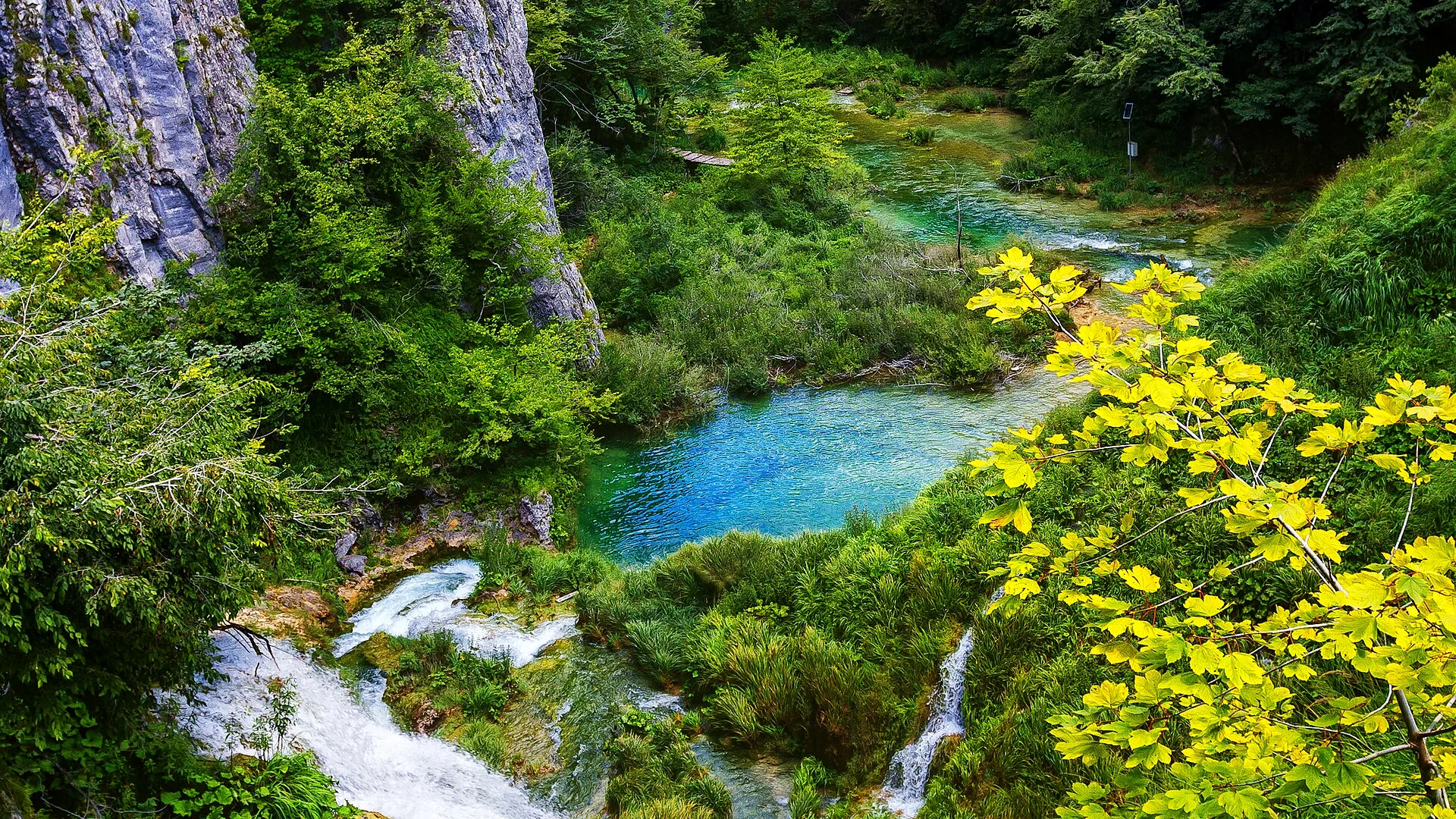




















Stepping onto the sunken wooden boardwalks of Plitvice Lakes National Park (Nacionalni park Plitvička jezera) often feels like wandering inside a living water labyrinth. As Croatia’s oldest and largest national park, this UNESCO World Heritage site encompasses 16 terraced lakes linked by a cascade network carved through karst limestone. Most travelers rush through the central boardwalks between Entrance 1 and the iconic Great Waterfall (Veliki Slap), enduring heavy tour-group congestion.
However, with a strategic approach, you can escape the crowds. By venturing beyond the standard marked pathways onto the park’s lesser-known perimeter loops, you discover ancient beech forests, elevated canyon cliffs, and solitary vantage points where the rush of crystalline water drowns out the outside world. This comprehensive Plitvice Croatia travel guide unlocks the park’s quieter circuits, essential logistics, and cultural traditions.
Quick Travel Snapshot
- Best Time to Visit: May to early June (surging waterfalls, lush green foliage) or late September to mid-October (vibrant autumn reflections, crisp air, lower foot traffic).
- Nearest Airports: Zagreb Airport (ZAG) is 135 km north (approx. 2 hours by car); Zadar Airport (ZAD) is 120 km south (approx. 1.5 hours by car).
- Recommended Duration: 1.5 to 2 days (enables full exploration of both the Upper and Lower Lakes during golden morning hours).
- Entrance Fee: Tiered seasonally; roughly €10–€15 in winter, €25 in shoulder season, and €40 during peak summer (July–August). Tickets include electric boat rides on Lake Kozjak and panoramic shuttle trains.
- Difficulty Level: Easy to Moderate. Most walking takes place on uneven log boardwalks and packed gravel trails with gradual elevation gains.
Hidden Viewpoints and Secret Walking Itineraries
Plitvice is broadly split into two distinct sectors: the Lower Lakes (Donja jezera), set deep inside a dramatic limestone canyon, and the Upper Lakes (Gornja jezera), characterized by sprawling travertine barriers, dense forest cover, and gentle falls. To experience the best Croatia waterfalls hiking without moving shoulder-to-shoulder with tour groups, you must know how to circumvent standard routes.
The Upper Karst Loop: Escaping to Program K
The park authorities suggest marked “Programs” ranging from A to K. While casual visitors stick to the abbreviated Program B or C, committed hikers should head immediately for Program K.
Covering roughly 18 kilometers, Program K circles the entire lake system on foot, eliminating the electric boat and panoramic shuttle unless you actively choose to cut the hike short. Beginning at Entrance 2, this trail peels away from the boardwalks of Lake Kozjak and ascends along the western forest fringe. Here, the trail cuts beneath towering silver firs and mountain maples, giving you aerial panoramas of Lake Gradinsko and Lake Galovac without the rhythmic clatter of thousands of footsteps on timber.
The Cliffside Overlook of Veliki Slap (Vidikovac Sight)
The standard boardwalk leads directly to the foot of Veliki Slap, where mist douses hundreds of visitors posing on the terminal viewing platform. To witness the true scale of this 78-meter cascade in absolute solitude, seek out the unmarked canyon-rim viewpoint.
Cross the limestone bridge at the base of the Lower Lakes, proceed past the stairs leading to Entrance 1, and take the uphill trail toward the hamlet of Poljanak. A quiet gravel lane branches southwest along the edge of the limestone cliffs. From this unrailed perch, you look down into the gorge, observing the roaring curtain of Veliki Slap framed against the tiered turquoise pools below. The perspective rivals the dramatic cliff drops found in our Dolomites Travel Guide, yet it remains overlooked by mainstream bus tours.
Trail of the Old Forest: Čorkova Uvala
Plitvice holds one of Europe’s rarest treasures: a certified virgin forest (prašuma). Located in the northwestern sector of the park, Čorkova Uvala preserves centuries-old trees untouched by logging.
Accessible via a 21-kilometer extended trail from the Upper Lakes (or a guided ranger expedition), this path takes you past beech trees measuring over 40 meters high. The understory supports brown bears, Eurasian lynx, and wild boars. Instead of walking over water, you trek across deep loam and karst sinkholes, listening to endemic woodpeckers. If you crave true wilderness rather than manicure-grade boardwalks, this is the park’s premier backcountry trek.
Geological Magic and Cultural Heritage
The ethereal, shifting turquoise hue of Plitvice’s waters is not a static feature; it is the product of continuous biochemical sedimentation.
The Living Stone: How Travertine Forms
The core of the park’s landscape is sedra (tufa or travertine). Rainwater absorbs carbon dioxide as it percolates through the surrounding limestone plateaus, transforming into a weak carbonic acid that dissolves the rock. As this mineral-rich water surges into the surface lakes, mosses (particularly Cratoneuron commutatum) and micro-algae strip away the carbon dioxide.
This process causes pure calcium carbonate to precipitate, encrusting aquatic plants, submerged logs, and rock shelves. Over centuries, these mineralized plants build living dams that grow upward at rates of up to one centimeter per year, constantly altering the water’s flow and forming new waterfalls while drowning ancient channels.
The Legend of the Black Queen
Long before scientists mapped the karst hydrology, locals explained the lakes through folklore. According to legend, a catastrophic drought once struck the historical region of Lika. The land cracked, crops died, and riverbeds turned to dust. The desperate inhabitants prayed to the heavens for relief.
In response, the benevolent Black Queen (Crna Kraljica) descended from the Velebit mountains enveloped in thunder and rain clouds. She commanded the heavens to open, sending down torrential rains for days until water gathered in hollows and spilled across stone ridges, forming the sixteen lakes. In an era before national borders, the area was revered as the “Devil’s Garden” (Vražji vrt), feared for its dense forests, bottomless chasms, and untamable wildlife.
Echoes of Modern History
Beyond its ancient geology, Plitvice witnessed the opening skirmishes of the Croatian War of Independence (Homeland War). On Easter Sunday in 1991, clashes erupted around the park’s administrative headquarters in what became known as the “Plitvice Bloody Easter.” For four years, the park fell outside government control, suffering neglect before being recaptured and painstakingly demined. Today, the pristine waters provide no hint of that turmoil, serving instead as a quiet sanctuary of national renewal.
Practical Logistics: Planning Your Visit
Success at Plitvice depends on preparation. The park strictly caps hourly visitors to prevent environmental degradation and gridlock.
Ticket Reservations and Seasonal Hours
- Advance Booking: You must book tickets online via the official national park portal at least 48 hours in advance, especially from April through October. Select your specific date, entry hour, and entrance point (Entrance 1 or Entrance 2). If you miss your allocated entry window, your ticket becomes void.
- Operating Hours: The park opens at 07:00 or 08:00 depending on the season and closes near dusk. To experience empty boardwalks, be at the turnstiles ten minutes before opening, or enter after 15:00 when tour buses depart for Zagreb and Split.
Entrance 1 vs. Entrance 2
- Entrance 1 (Northern Gate): Provides immediate panoramic access to the Lower Lakes and the direct descent to Veliki Slap. Ideal for day-trippers prioritizing dramatic canyon views early in the day.
- Entrance 2 (Southern Gate): Positioned closer to the Upper Lakes, Kozjak ferry station, and park hotels. Entering here lets you explore the tranquil upper basins early before crossing to the Lower Lakes in the afternoon light.
Transportation and Parking
- By Bus: Regular long-distance coaches operate from Zagreb Central Bus Station (approx. 2 hours 15 minutes) and Zadar (approx. 1 hour 45 minutes), dropping passengers directly at both Entrance 1 and Entrance 2.
- By Car: Take the highway A1, exiting at Karlovac from the north or Gornja Ploča from the south, then follow the D1 national route. Paid parking lots are available at both entrances (€1.50–€2.00 per hour).
- Parking GPS Coordinates:
- Entrance 1 Lot: 44.9053° N, 15.6115° E
- Entrance 2 Lot: 44.8829° N, 15.6234° E
Local Culinary Specialties: Flavors of Lika
The mountainous Lika-Senj county is renowned for hearty, rustic mountain cooking crafted to sustain shepherds through cold winters. Unlike the coastal Mediterranean fare of olive oil and seafood, Lika relies on wood fires, smoked meats, wild mushrooms, and dairy. Much like exploring the alpine valleys described in our Hallstatt Alpine Village guide, dining in this region emphasizes deep-rooted mountain traditions.
Regional Dishes to Sample
- Janjetina s ražnja: Whole lamb roasted slowly over an open beechwood spit until the skin turns crisp and golden, traditionally paired with spring onions and warm bread.
- Lički krumpir: The locally grown potato, granted EU Protected Geographical Indication status. Halved, salted, and roasted in their skins (police), often topped with slices of cured bacon (slanina).
- Škripavac Cheese: A fresh, squeaky, semi-soft cow’s milk cheese with a delicate sweet curd flavor.
- Pastrva na žaru: Fresh river trout pulled from the nearby Gacka River, lightly dusted with corn flour and grilled with garlic butter.
Where to Dine
- Lička Kuća (Located at Entrance 1): Built in the style of an authentic traditional wooden manor, this park-operated restaurant features an open-hearth hearth (ognjište). Order the slow-cooked veal stew or homemade sourdough bread paired with local plum brandy (šljivovica).
- Bistro Vučnica (Mukinje Village): A casual eatery beloved by locals, sitting just 2 kilometers south of Entrance 2. Famous for stone-baked pizzas, wild boar sausages, and craft beer from the nearby Pivovara Ličanka.
Sustainable and Respectful Travel
Plitvice’s beauty rests on an extraordinarily fragile ecosystem. The travertine barriers are brittle and can take centuries to regenerate if damaged.
- Strict Swimming Prohibition: Bathing, wading, or dipping your feet into the lakes has been illegal since 2006. Sunscreens, skin oils, and mechanical disturbance break down the delicate algae matrices necessary for travertine growth.
- Stay on the Marked Wood: Straying off the planks compresses lakeside soils, causes erosion, and destroys rare endemic orchids (such as the Lady’s Slipper).
- Pack Out All Trash: Waste bins along the boardwalks are deliberately sparse to discourage bears and wild boars from scavenging. Carry a small sealable bag for your personal refuse.
- Keep Dogs on Short Leashes: Pets are welcome within the park, but they must remain leashed at all times to protect ground-nesting birds and prevent falls from slick, unrailed boardwalks.
Frequently Asked Questions
Can I see both the Upper and Lower Lakes in a single day?
Yes. If you maintain an active walking pace, you can cover both sections via Program C or Program H in roughly 4 to 6 hours. However, taking this approach means sharing the narrowest sections of the boardwalks during peak midday congestion. Spending two days allows you to split your trip: visit the Lower Lakes at dawn on Day 1, and wander the Upper Lakes early on Day 2.
Is Plitvice accessible for travelers with mobility challenges or strollers?
The main routes inside the canyon are not wheelchair or stroller-friendly. The pathways consist of split-log boardwalks without handrails, steep stone steps, and uneven earth packed with tree roots. Parents should bring a sturdy baby carrier rather than a pram. Some viewing lookouts near Entrance 1 offer paved, wheelchair-accessible vistas over Veliki Slap from the upper cliff line.
What should I pack for hiking around the lakes?
Wear sturdy footwear with rubberized lug soles, as wet spray from waterfalls keeps the timber planks slick throughout the day. Bring a waterproof outer shell even on clear days, as the canyon funnels rapid localized weather fronts. Carry a refillable water bottle, sun protection, and a portable power bank for your camera and navigation apps.
Is Plitvice worth visiting during the winter months?
Winter transforms Plitvice into a frozen wonderland of giant icicles and snow-covered pines. Ticket prices drop significantly, and tourist traffic drops to a fraction of summer levels. However, winter visits require flexibility: the Upper Lakes and boat lines frequently shut down due to ice cover, leaving only the Lower Lakes open for walking. Sturdy insulated boots and microspikes are mandatory for icy boardwalks.